
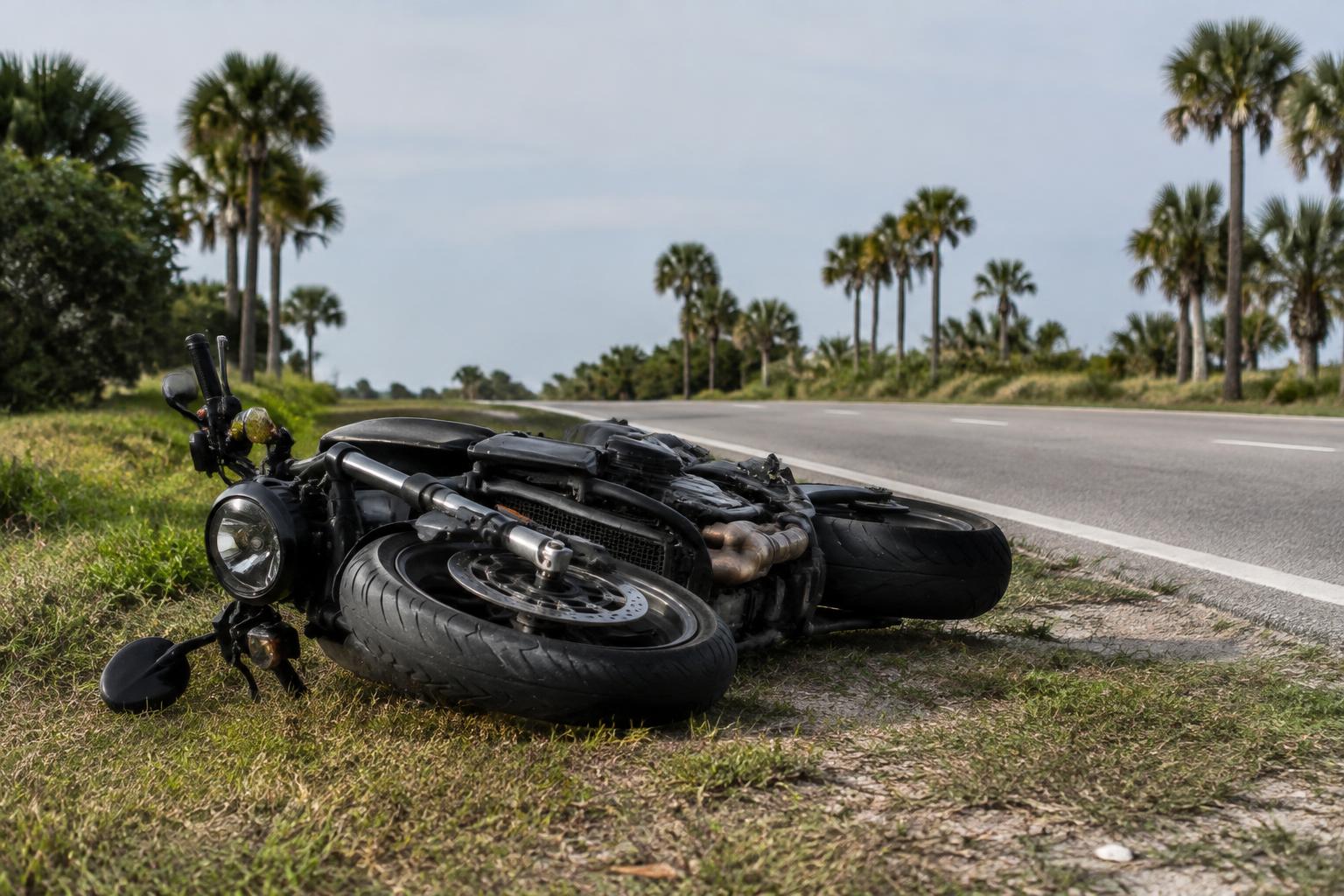
Why Motorcycle Accidents Often Result in Serious Injuries
Motorcycles offer riders far less physical protection than passenger vehicles, which means even a lower-speed collision can result in significant injuries. Riders may be thrown from the bike, dragged across pavement, or struck directly by another vehicle. These dynamics are different from a typical rear-end collision between two cars, where the vehicle frame offers more protection to occupants.
Because of the severity often involved, motorcycle accident injuries can include road rash, fractures, traumatic brain injuries, and spinal injuries, all of which typically require thorough medical documentation for a claim.
Common Causes of Motorcycle Accidents in Florida
- Drivers failing to check blind spots before changing lanes
- Left-turning vehicles misjudging a motorcycle's speed or distance
- Distracted or impaired drivers not noticing a motorcycle in traffic
- Poor road conditions, such as potholes or debris
- Sudden lane changes in heavy Miami traffic
Many of these causes overlap with those seen in distracted driving accidents, since drivers who aren't fully attentive are less likely to notice a motorcycle's smaller profile.
Florida Helmet Laws and How They May Affect a Claim
Florida law allows riders over a certain age to ride without a helmet if they carry a specified amount of insurance coverage, though wearing a helmet is generally recommended for safety. Whether a rider was wearing a helmet at the time of a crash can sometimes become a point of discussion in a claim, particularly regarding head injury damages. This is a fact-specific issue that depends on the circumstances of each case.
Do Insurers Treat Motorcycle Riders Unfairly?
Riders sometimes face an unspoken bias from insurance adjusters, who may assume a motorcyclist was speeding or riding recklessly simply because of the type of vehicle involved. This assumption isn't supported by evidence in many cases, and a thorough investigation, including witness statements and traffic camera footage, can help counter unfounded assumptions. Comparative fault arguments raised by insurers should be backed by actual evidence, not stereotypes about motorcyclists.
If you feel your claim was undervalued because of assumptions about motorcycle riding, this resource discusses common reasons claims don't reflect their true value.
How Insurance Coverage Works for Motorcycle Accidents
Motorcycles are not typically covered under Florida's standard PIP requirement in the same way passenger cars are, so riders often rely on medical payments coverage, health insurance, or a claim against the at-fault driver's liability coverage for initial treatment. If the at-fault driver has insufficient coverage, uninsured motorist claims coverage on an applicable policy may help fill the gap.
Because motorcycle-specific coverage can vary widely between policies, reviewing exactly what coverage applies is an important early step in any motorcycle accident claim.
What to Do After a Motorcycle Accident
Immediate Steps
- Call 911 and request medical attention, even if injuries seem minor
- Move to a safe location if possible without aggravating injuries
- Document the scene with photos of both vehicles and any visible road hazards
- Get contact information from witnesses
- Preserve damaged gear, such as your helmet, as potential evidence
How Comparative Fault Applies to Motorcycle Claims
Florida's comparative fault rules apply to motorcycle accidents just as they do to other vehicle crashes, meaning your compensation may be reduced if you're found partially at fault. Given the potential for insurer bias against riders, presenting clear, objective evidence, such as traffic camera footage or an accident reconstruction, can be especially important in these claims.
Motorcycle Accidents Involving Multiple Vehicles
Some motorcycle crashes involve more than one other vehicle, similar to a multi-vehicle accident, which can complicate determining fault and dividing liability among several insurers. In these situations, a clear sequence of events supported by evidence becomes even more important for resolving the claim fairly.
The Importance of Visibility in Motorcycle Accident Claims
Because motorcycles have a smaller visual profile than cars, visibility often becomes a focal point in motorcycle accident investigations. Factors like lighting conditions, weather, the motorcycle's headlight use, and the positioning of both vehicles at the time of impact can all play a role in determining whether a driver reasonably should have seen the motorcycle. Reflective gear and properly functioning lights can support a rider's position that they took reasonable precautions, while conditions like glare or obstructed sightlines may point toward driver error instead.
Motorcycle Accidents at Intersections
A significant portion of motorcycle accidents occur at intersections, often when a driver turns left across a motorcyclist's path without accurately judging speed or distance. These crashes share some similarities with t-bone accidents involving passenger vehicles, but the injury severity for the rider is often greater. Traffic signal timing, witness accounts, and any available intersection camera footage can help clarify who had the right of way and whether the turning driver failed to yield appropriately.
How Long Does a Motorcycle Accident Claim Take in Florida?
The timeline for a motorcycle accident claim depends heavily on injury severity and how clearly liability can be established. Claims involving significant injuries, such as fractures or traumatic brain injuries, often take longer to resolve because treatment must progress enough for a full understanding of medical needs and costs. Disputes over fault, especially where insurer bias against riders comes into play, can also extend the process.
Providing complete, well-organized documentation from the outset, including medical records and evidence supporting your account of the crash, can help avoid unnecessary delays.
What Evidence Helps Prove Fault in a Motorcycle Accident?
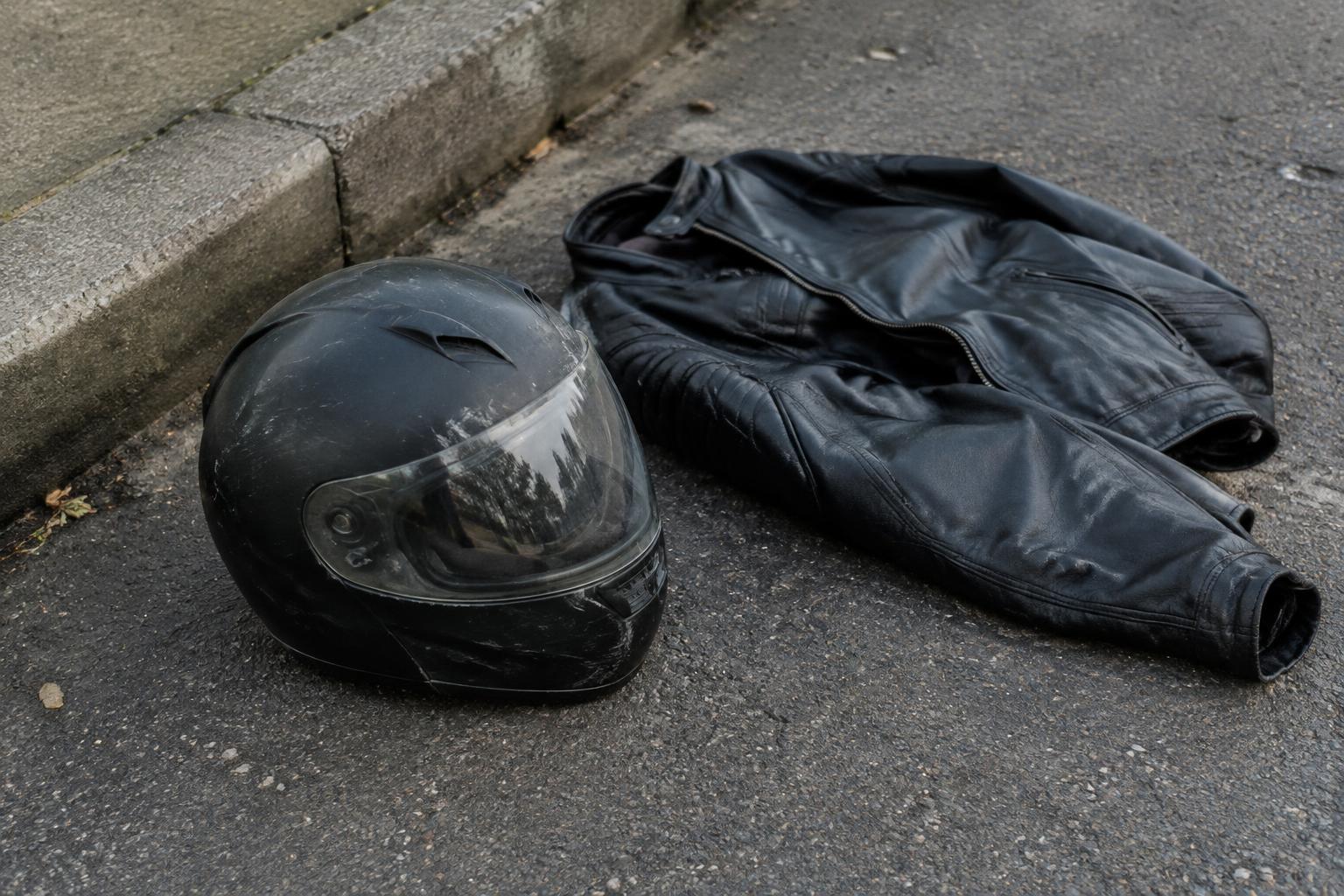
Because motorcycle riders often face skepticism from insurers, strong evidence matters even more in these claims. Useful evidence can include traffic camera or nearby business surveillance footage, skid mark analysis, the final resting positions of both vehicles, and witness statements describing what happened before impact. A rider's own damaged gear, such as a helmet or jacket, can also help illustrate the force of the collision.
When available, accident reconstruction based on physical evidence can help counter unsupported assumptions that a rider was speeding or riding unsafely.
Lane Splitting and Other Motorcycle-Specific Fault Issues
Lane splitting, or riding between lanes of slow-moving traffic, is not permitted in Florida, and if a rider was doing so at the time of a crash, it could become a factor in a comparative fault analysis. Other motorcycle-specific issues that sometimes arise include modified exhaust systems, aftermarket parts, or riding with a passenger, all of which an insurer might raise even when unrelated to how the crash occurred. Addressing these issues directly with accurate information, rather than letting them go unaddressed, tends to produce a more balanced evaluation of fault.
Serving all of Florida
Motorcycle Accidents Guidance in Miami-Dade County and Across Florida
Orellana Law has one office in Miami and serves clients with motorcycle accidents matters throughout Miami-Dade County and across the entire State of Florida. Wherever you are in the state, you can meet with the firm by phone or video. Contact the firm to discuss your situation.