
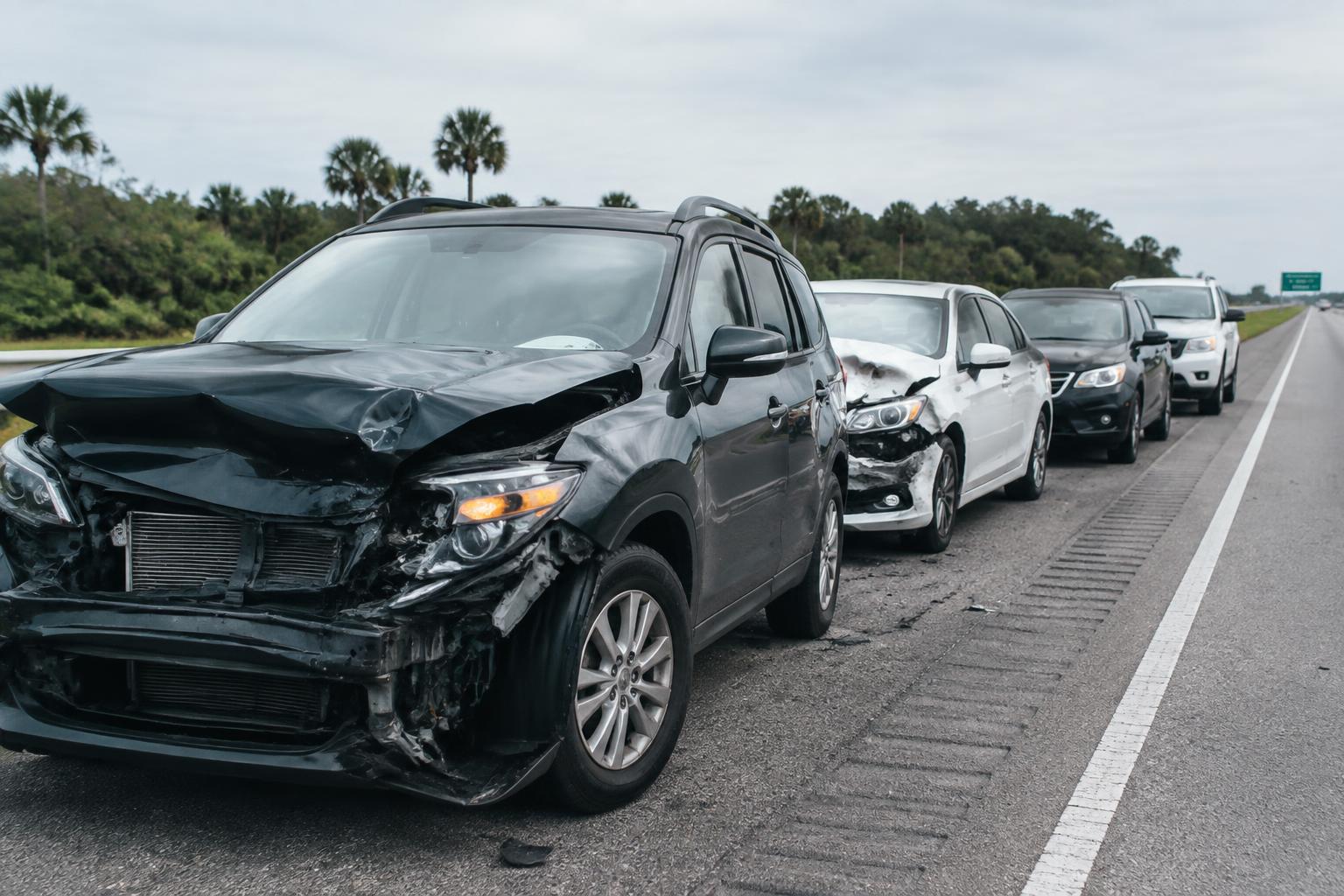
What Counts as a Multi-Vehicle Accident?
A multi-vehicle accident involves three or more cars, and can range from a small chain-reaction fender bender to a large highway pileup involving dozens of vehicles. These crashes often start with a single triggering event, such as a sudden stop, a collision, or a hazard like heavy fog or sudden rain, and then cascade as following vehicles are unable to stop in time.
Because so many vehicles and drivers can be involved, sorting out what happened, and in what order, is often more complicated than in a typical two-car crash covered under our broader car accidents practice.
How Chain-Reaction Crashes Typically Unfold
Chain-reaction accidents often begin with one vehicle braking suddenly or colliding with another, and then additional vehicles strike each other in a rapid sequence. Weather conditions like heavy Florida rain, reduced visibility, or fog can increase the likelihood that a single incident cascades into a larger pileup.
Distracted or following-too-closely drivers are frequently a factor, since inadequate following distance leaves little time to react once the vehicles ahead begin to stop or collide.
Determining Fault Among Multiple Drivers
Because a multi-vehicle accident can involve several distinct impacts, more than one driver may bear some responsibility for the overall outcome. Investigators typically look at the sequence of impacts, vehicle damage patterns, and witness accounts to piece together which driver's actions caused which portion of the harm.
Florida's Comparative Fault Approach
Florida applies a comparative fault framework, which allows for compensation to be allocated among multiple at-fault parties based on their respective share of responsibility. This is particularly relevant in pileups, where two, three, or more drivers might each be found partially responsible for different aspects of the crash.
Why Insurance Claims Get Complicated in Pileups
With several insurance companies potentially involved, each insurer often tries to minimize its own policyholder's share of fault, which can lead to disputes that slow down the claims process. It isn't unusual for injured people to find themselves caught between multiple insurers, each pointing to another driver as the primary cause.
Our resource on why insurance claims get delayed or undervalued discusses some of the tactics that can prolong disputes like these, which are especially common in multi-vehicle cases.
How Florida's No-Fault Rules Apply to Multi-Car Crashes
Regardless of how many vehicles are involved, PIP coverage generally applies first to cover a portion of medical expenses and lost wages, up to policy limits. When injuries are severe enough to meet Florida's threshold, injured drivers or passengers may also be able to pursue claims against one or more at-fault drivers.
Because several vehicles are often involved, more than one claim may need to be pursued simultaneously, which can add complexity compared to a routine two-vehicle collision.
Injuries Common in Multi-Vehicle Accidents
- Whiplash and other soft-tissue injuries from repeated impacts
- Traumatic brain injuries
- Spinal injuries
- Fractures from being struck multiple times
- Injuries worsened by being trapped between vehicles
Because occupants in a pileup can be struck more than once, from the front and rear, injuries sometimes compound in ways that are harder to attribute to a single impact. This makes thorough documentation from a medical provider especially valuable.
Fog, smoke from nearby brush fires, and sudden heavy rain are conditions that have historically contributed to some of the largest multi-vehicle pileups on Florida highways. When visibility drops sharply and drivers are traveling close together at highway speed, even a single vehicle slowing down can trigger a rapid chain reaction involving many more cars than in a typical crash.
Passengers involved in a multi-vehicle accident may have claims against more than one driver, depending on how the crash sequence unfolded and which impacts caused which injuries. Sorting out these overlapping claims often benefits from a clear timeline of events supported by physical evidence and witness accounts gathered as close to the crash as possible.
When Commercial Vehicles or Rideshare Drivers Are Involved
Larger pileups sometimes involve commercial trucks, delivery vans, or rideshare vehicles, each of which may carry different insurance requirements than a standard personal auto policy. Identifying which policies apply, and in what order, is an important part of evaluating a multi-vehicle claim.
If a commercial truck was involved, our truck accidents page discusses some of the additional considerations that can come into play in these larger vehicle cases.
Getting Help After a Multi-Vehicle Accident
Because multi-vehicle accidents often involve several insurance companies and disputed fault allocations, having assistance sorting through the evidence can be valuable. An attorney can help identify all potentially liable parties, gather evidence from the scene, and communicate with each insurer involved in the claim.
George Orellana and our office offer a free consultation to review the facts of your pileup and discuss potential next steps. This is not legal advice, and each situation depends on its own specific circumstances.
If your pileup resulted in the loss of a loved one, our page on fatal vehicle accidents discusses how these claims are generally approached in Florida. Large multi-vehicle crashes unfortunately sometimes involve fatalities, and understanding your options during such a difficult time is an important part of the process.
Whether your accident involved three vehicles or a much larger pileup, our broader car accidents page and resources section provide additional context that can help you understand the claims process as you move forward.
How Long Do Multi-Vehicle Accident Claims Take to Resolve?
Multi-vehicle accident claims often take longer to resolve than typical two-car crashes because several insurance companies, and sometimes several attorneys, are involved in sorting out how fault should be divided. Each insurer may need to complete its own investigation before agreeing to any allocation of responsibility, which can slow negotiations considerably.
The severity of injuries involved also affects the timeline, since claims involving extended treatment generally aren't ready to resolve until the full extent of damages is understood. Patience, paired with organized documentation, tends to produce a more accurate outcome than rushing a pileup claim toward an early settlement.
What Evidence Helps Prove Fault in a Chain-Reaction Crash?
Reconstructing a multi-vehicle pileup often requires more evidence than a simple two-car collision because there are more impacts, and more potential causes, to sort through. Traffic camera footage, dashcam recordings from any of the involved vehicles, and detailed photos of each point of impact can help establish the sequence of events.
- Order and location of each vehicle's damage
- Witness statements describing the sequence of impacts
- Weather and visibility conditions at the time of the crash
- Traffic or dashcam camera footage
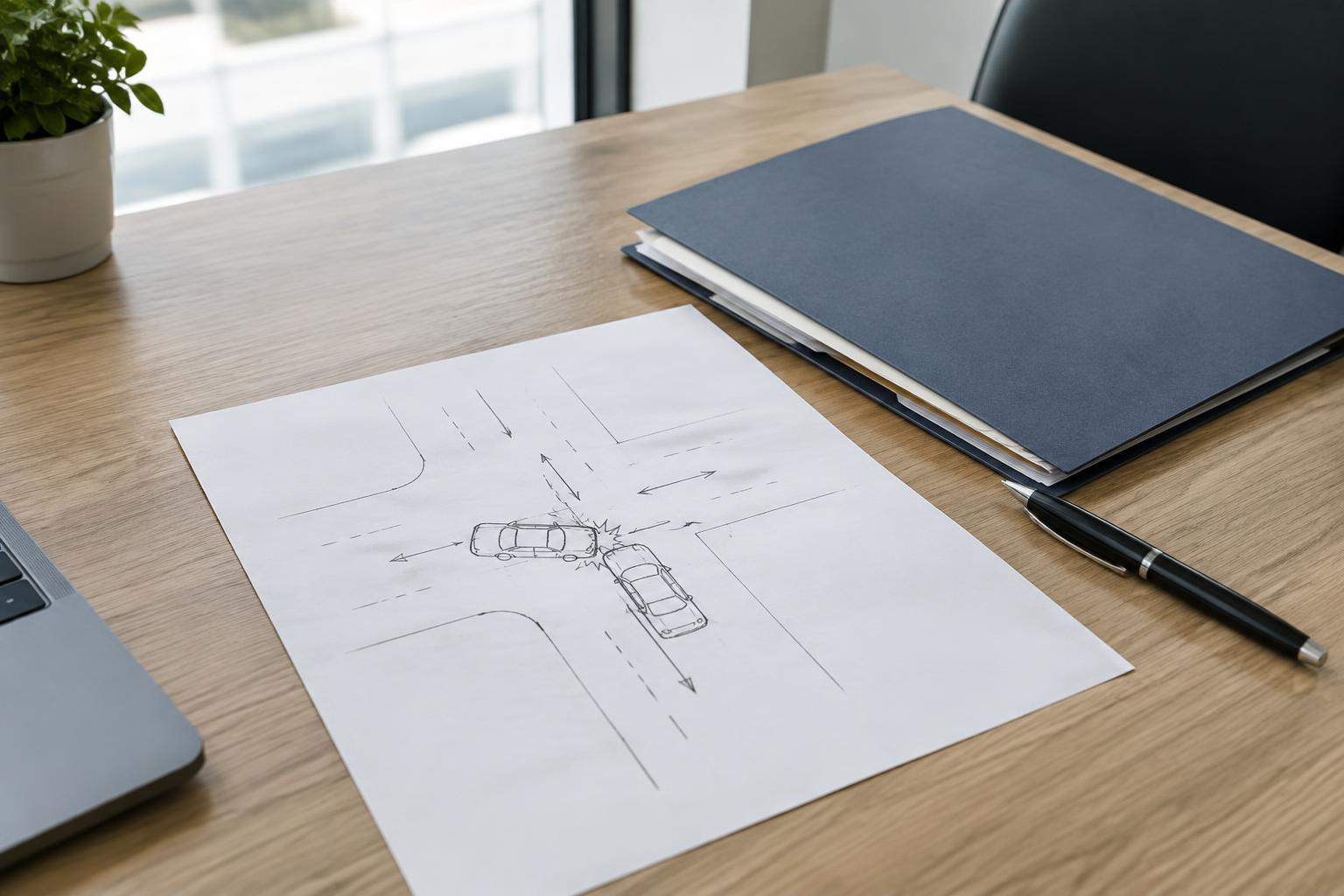
- The official crash report's diagram of vehicle positions
Mistakes to Avoid After a Multi-Vehicle Accident
In a pileup, it's easy to focus only on the vehicle directly in front of or behind you and overlook the full sequence of events. Failing to document every vehicle involved, or agreeing too quickly with another driver's account of what happened, can complicate your ability to recover full compensation later.
It's also a mistake to accept a fault allocation from an insurer without reviewing the full evidence yourself, since insurers involved in multi-vehicle claims sometimes attempt to shift a larger share of responsibility onto other drivers, including you, to minimize their own payout.
Serving all of Florida
Multi-Vehicle Accidents Guidance in Miami-Dade County and Across Florida
Orellana Law has one office in Miami and serves clients with multi-vehicle accidents matters throughout Miami-Dade County and across the entire State of Florida. Wherever you are in the state, you can meet with the firm by phone or video. Contact the firm to discuss your situation.