What Is a T-Bone Accident?
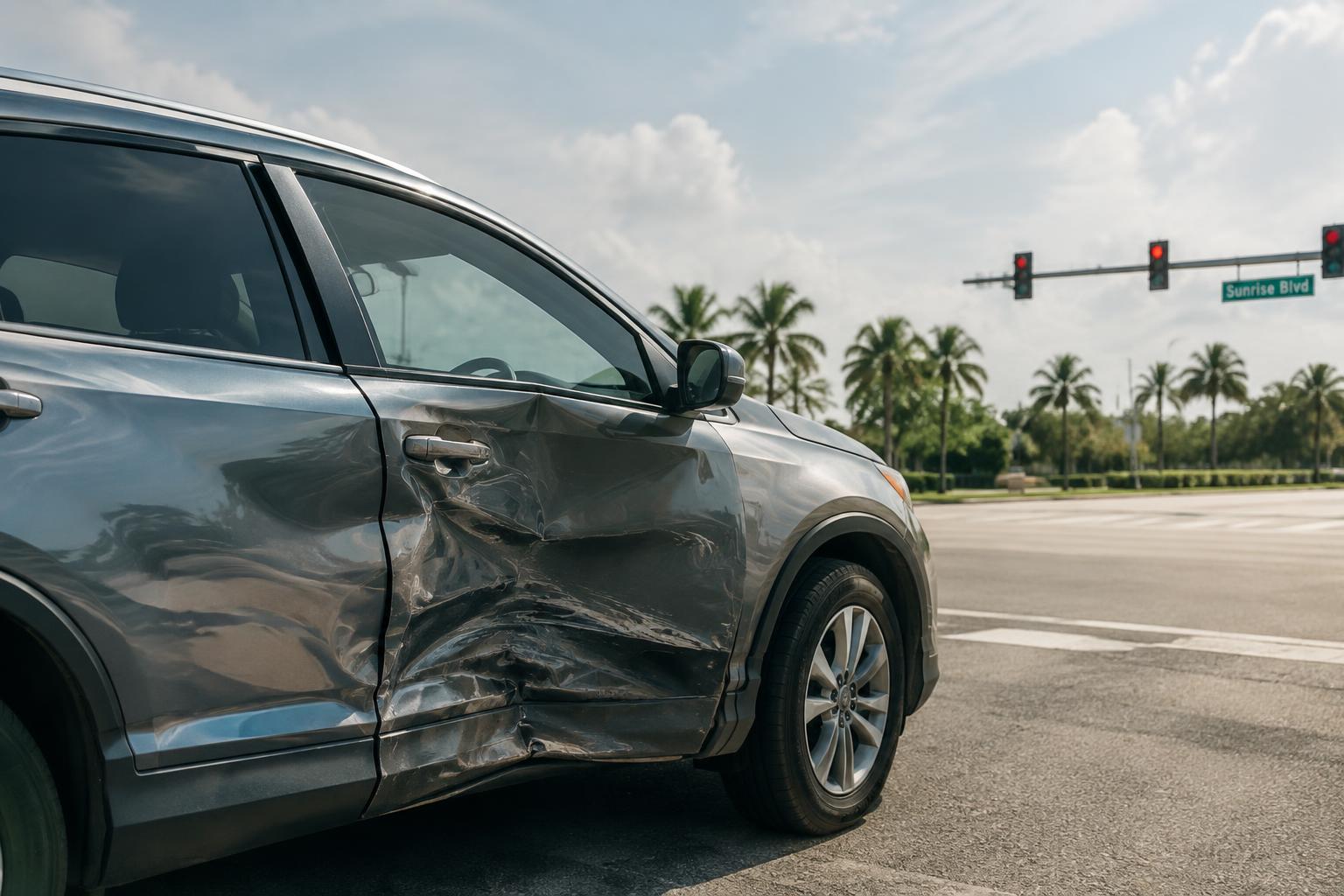
A T-bone accident occurs when the front of one vehicle strikes the side of another, forming a T shape at the point of impact. These crashes most often happen at intersections when a driver runs a red light or stop sign, fails to yield while turning, or misjudges the timing of a traffic signal.
Because the side of a vehicle has less structure to absorb impact compared to the front or rear, occupants on the struck side can suffer significant injuries even in a crash that might seem moderate from the outside. This makes prompt medical evaluation especially important after any intersection collision.
Common Causes of Side-Impact Collisions
- Running a red light or stop sign
- Failing to yield the right of way when turning left
- Distracted driving while approaching an intersection
- Misjudging a yellow light and entering too late
- Speeding through an intersection with limited visibility
Because these crashes often involve conflicting accounts of who had the right of way, gathering evidence quickly is important. Traffic camera footage, nearby business surveillance video, and witness statements can all help establish what actually happened at the moment of impact.
Injuries Commonly Associated with T-Bone Crashes
The location of the impact relative to where occupants are seated plays a major role in the severity of injuries from a side-impact crash.
- Rib fractures and chest injuries
- Pelvic and hip injuries
- Traumatic brain injuries from head impact with the window or door frame
- Spinal injuries
- Internal organ injuries on the side of impact
Children and passengers seated on the side of the collision are often at greater risk, which is one reason thorough medical evaluation for all occupants is important after a T-bone crash.
Side-impact airbags and reinforced door structures have improved occupant protection over the years, but they can't eliminate the risk entirely, particularly in crashes involving a larger vehicle striking a smaller one. Understanding the make and model of both vehicles involved can sometimes help explain why injuries were more severe on one side of the collision than might otherwise be expected.
T-bone accidents involving a commercial vehicle, delivery truck, or rideshare driver can introduce additional insurance layers beyond the two personal auto policies typically involved in an intersection crash. Identifying every available source of coverage is an important part of evaluating what a claim may ultimately be worth, particularly when injuries are significant.
Determining Fault in Intersection Accidents
Fault in a T-bone accident generally hinges on traffic signal timing, right-of-way rules, and each driver's actions leading up to the crash. Florida law establishes right-of-way rules for intersections, and violating those rules, such as running a red light, is often a key factor in assigning liability.
When Fault Is Disputed by Both Drivers
It's common for each driver involved in a T-bone accident to claim they had a green light or the right of way. In these situations, physical evidence like the point of impact, vehicle positioning after the crash, and any available camera footage become especially important in resolving the dispute.
How Florida's No-Fault Laws Apply to T-Bone Claims
Like other car accidents in Florida, PIP coverage generally applies first regardless of fault, covering a share of medical expenses and lost income up to policy limits. If injuries from the T-bone crash are serious enough to meet Florida's threshold, an injured person may also pursue a claim against the driver found at fault for the crash.
Comparative fault principles may also apply if both drivers share some responsibility for the collision, which can affect the amount of compensation available.
Multi-Vehicle T-Bone Accidents
Some T-bone collisions set off a chain reaction, pushing one or both vehicles into additional cars, pedestrians, or roadside objects. These scenarios can complicate liability, since more than one driver's actions may have contributed to the overall outcome.
If your crash involved several vehicles, our page on multi-vehicle accidents discusses how fault and insurance coverage are typically evaluated when more than two drivers are involved.
Property Damage and Vehicle Safety Considerations
T-bone crashes often cause structural damage that isn't always obvious from the outside, including bent frames, damaged suspension components, and compromised side airbags or door mechanisms. A thorough inspection helps ensure a vehicle is either safely repaired or properly valued if it's deemed a total loss.
If your insurer's repair or valuation estimate seems low, our vehicle property damage claims page discusses how to address disputes over vehicle damage.
Getting Help After a T-Bone Accident
Because these crashes so often come down to a dispute about who ran the light or failed to yield, having someone review the available evidence early can make a meaningful difference in how your claim is resolved. An attorney can help gather camera footage before it's deleted, interview witnesses, and communicate with insurance adjusters on your behalf.
Contact our office to request a free consultation and discuss what happened in your accident. This is not legal advice, and outcomes depend on the specific facts of each case.
T-bone accidents involving pedestrians or cyclists crossing at the same intersection can raise additional questions about right of way and crosswalk signals. If your accident involved a pedestrian accident or bicycle accident component, it's worth discussing those details specifically, since the applicable rules and evidence can differ from a standard vehicle-to-vehicle collision.
Whether your T-bone accident happened at a busy Miami intersection or a quieter neighborhood crossing, the underlying questions tend to be similar: who had the right of way, and what evidence supports that conclusion. Our broader car accidents page offers additional context on how these investigations generally proceed.
How Long Does a T-Bone Accident Claim Take in Florida?
The timeline for a T-bone accident claim depends largely on how quickly liability can be established and how long medical treatment lasts. When one driver clearly ran a red light or stop sign, and there's supporting camera footage, a claim may move relatively efficiently. When both drivers dispute who had the right of way, the process can take longer while evidence is gathered and reviewed.
Serious injuries from the side-impact nature of these crashes, such as rib fractures or internal injuries, may also require extended treatment before a fair settlement value can be determined, which can extend the overall timeline of an intersection collision claim.
What Evidence Helps Prove Fault at an Intersection?
Because T-bone accidents so often hinge on signal timing and right of way, strong evidence can make a significant difference in how a claim is resolved. Traffic camera footage from the intersection itself, nearby business surveillance video, and the responding officer's crash report are frequently the most persuasive pieces of evidence.
- Red-light or traffic camera footage
- Witness statements from drivers or pedestrians nearby
- Vehicle damage patterns showing the angle of impact
- Skid marks or lack thereof indicating braking behavior
- Cell phone records if distraction is suspected
T-Bone Accidents in Miami-Dade vs. Elsewhere in Florida
Busy Miami-Dade intersections, particularly along major corridors with heavy pedestrian and vehicle traffic, tend to see a higher volume of T-bone accidents than quieter roads elsewhere in Florida. Dense traffic, frequent lane changes, and drivers rushing to make a light can all contribute to right-of-way disputes in urban intersections.
In less congested parts of the state, T-bone accidents more often occur at rural stop-sign intersections where a driver misjudges oncoming traffic. Regardless of location, the same basic legal principles, right of way, comparative fault, and Florida's no-fault system, apply, but the type and availability of evidence, such as nearby traffic cameras, can differ meaningfully between a busy Miami intersection and a rural crossing.
Serving all of Florida
T-Bone Accidents Guidance in Miami-Dade County and Across Florida
Orellana Law has one office in Miami and serves clients with t-bone accidents matters throughout Miami-Dade County and across the entire State of Florida. Wherever you are in the state, you can meet with the firm by phone or video. Contact the firm to discuss your situation.