
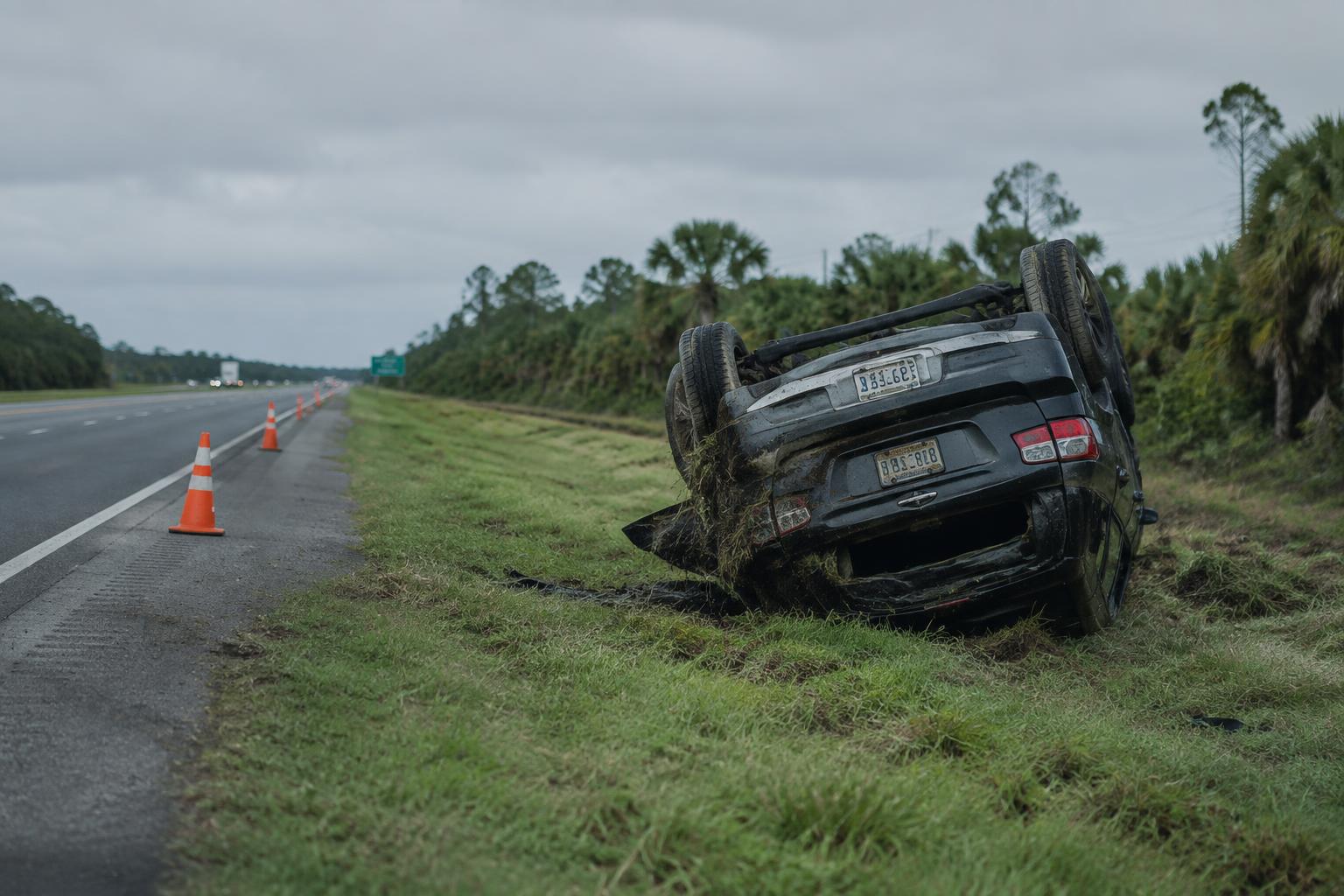
What Causes a Rollover Accident?
Rollover accidents can occur for a variety of reasons, from driver behavior to vehicle design and road conditions. A vehicle with a higher center of gravity, such as an SUV, van, or truck, is generally more prone to rolling over than a lower sedan when it makes a sudden or sharp maneuver.
- Tripping over a curb, guardrail, or soft shoulder
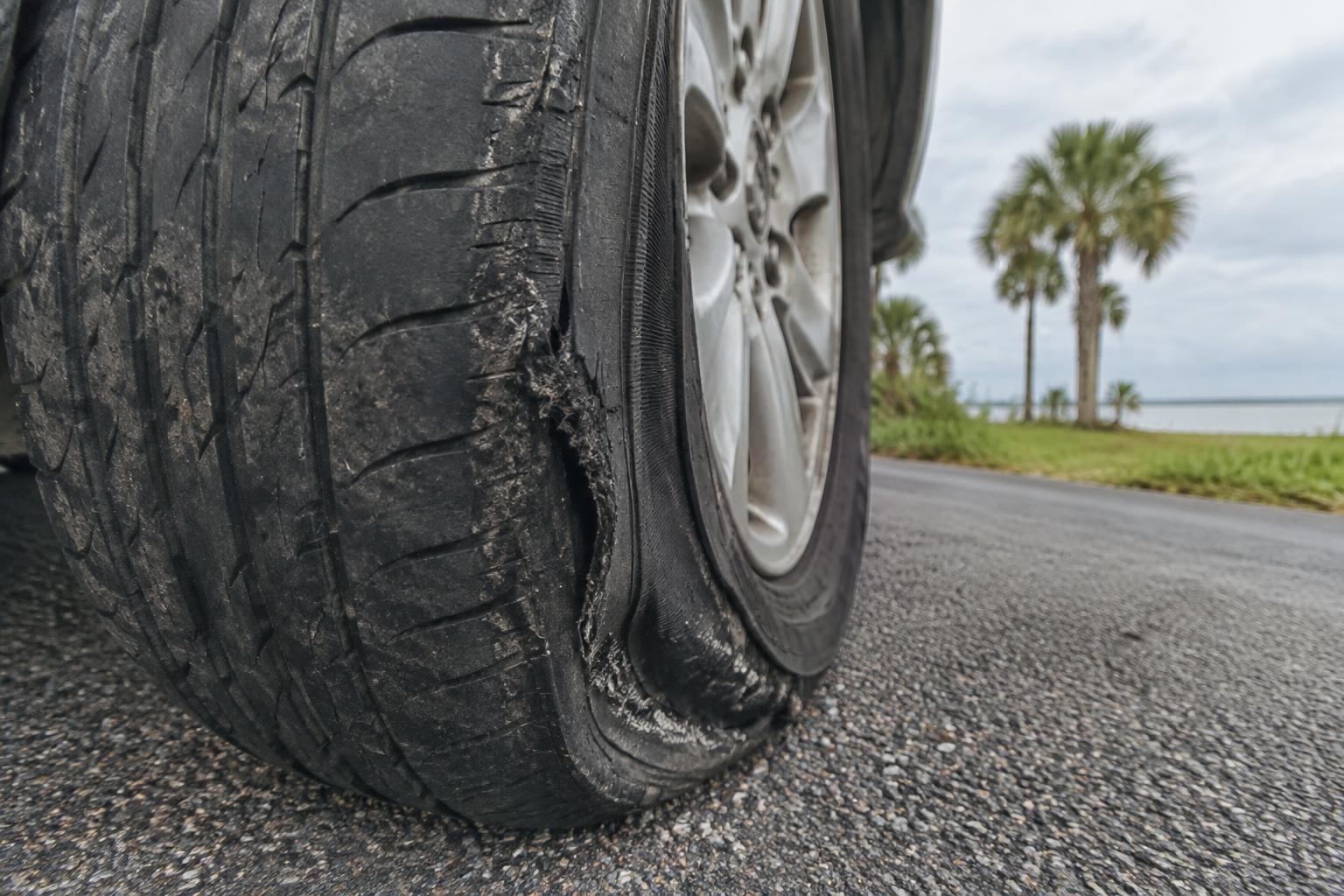
- Tire blowouts or tread separation
- Sharp evasive steering to avoid another vehicle
- Excessive speed on a curve or exit ramp
- Collision with another vehicle that causes a vehicle to flip
Types of Rollover Crashes
Rollovers are often categorized as tripped or untripped. A tripped rollover happens when a vehicle's tire catches on something, such as a curb or soft ground, causing it to flip. An untripped rollover happens without an external trigger, often due to a sharp steering maneuver combined with a vehicle's design characteristics.
Single-Vehicle vs. Multi-Vehicle Rollovers
Some rollovers happen without any other vehicle involved, while others occur after an initial collision, such as being struck from the side, pushes a vehicle into a roll. When another driver's actions triggered the sequence, that driver's insurance may share responsibility for the resulting damages.
Injuries Commonly Seen in Rollover Accidents
Because a rolling vehicle can strike the ground and interior repeatedly, injuries from these crashes tend to be serious.
- Traumatic brain injuries
- Spinal cord injuries, including paralysis in severe cases
- Ejection-related injuries when occupants aren't properly restrained
- Crush injuries from a collapsing roof
- Broken bones and severe lacerations
Some rollover injuries fall under the category of catastrophic injuries that require long-term care, rehabilitation, or permanent lifestyle adjustments.
Vehicle Defects and Rollover Risk
In some cases, a rollover may be connected to a vehicle defect, such as a tire that fails due to a manufacturing issue or a suspension system that behaves unpredictably during evasive maneuvers. Roof strength also plays a role in how much protection occupants have if a rollover does occur.
When a defect may have contributed to a crash, it can be worth exploring whether the situation overlaps with a defective product injury claim in addition to a standard car accident claim.
Seatbelt performance and roof crush resistance are two areas commonly scrutinized after a serious rollover, since both directly affect how much protection an occupant has when a vehicle flips one or more times. If a seatbelt failed to restrain an occupant properly, or if the roof collapsed further than expected given the speed and nature of the crash, these details can become relevant to understanding the full scope of what happened.
Electronic stability control and other modern safety systems have reduced rollover risk in newer vehicles, but they don't eliminate it entirely, particularly at higher speeds or on roads with soft shoulders. When evaluating a rollover claim, it can be useful to look at whether the vehicle's safety systems functioned as intended or whether a malfunction may have contributed to the loss of control.
Determining Liability After a Rollover Crash
Liability in a rollover accident depends heavily on what caused the vehicle to flip. If another driver's negligence, such as running a red light or making an unsafe lane change, set the rollover in motion, that driver's insurance may be responsible for the resulting harm.
If road conditions, a poorly maintained shoulder, or a design defect contributed to the crash, additional parties beyond the other driver may need to be considered as part of a thorough investigation.
How Florida's No-Fault System Applies to Rollover Claims
As with other car accidents, PIP coverage typically applies first in a rollover crash, covering a portion of medical expenses and lost wages regardless of fault. Given the severity often involved in rollovers, PIP limits can be exhausted quickly, making it important to understand what other coverage, such as the at-fault driver's liability insurance or your own uninsured/underinsured motorist (UM) coverage, may apply.
Our page on uninsured motorist claims explains how UM coverage generally works when the at-fault driver's insurance isn't enough to cover serious injuries.
Fatal Rollover Accidents
Rollover crashes, unfortunately, can be fatal, particularly when occupants aren't wearing seatbelts or when the vehicle's roof collapses under the force of the crash. Families who have lost a loved one in this type of accident may have options for pursuing accountability.
Our pages on fatal vehicle accidents and wrongful death provide more information about how these claims are generally approached.
Steps to Take After a Rollover Accident
If you're involved in a rollover, prioritize getting medical attention right away, even if injuries aren't immediately obvious. Preserve the vehicle if possible, since it may serve as important evidence regarding tire condition, roof integrity, or other mechanical factors relevant to the crash.
Our team can help you understand the facts of your case, including whether a defect, road hazard, or another driver's actions contributed to the rollover. Request a free consultation to discuss your situation with our office.
Rollovers involving motorcycles or larger commercial vehicles can raise additional considerations beyond a standard passenger car case. Our pages on motorcycle accidents and truck accidents address some of the unique factors that can come into play when these vehicle types are involved in a rollover.
Because rollover cases can involve overlapping questions about driver conduct, road conditions, and vehicle performance, a careful review of all these angles is often necessary to fully understand what happened. Our car accidents overview provides additional background on how these evaluations generally proceed across different crash types.
How Long Does a Rollover Accident Claim Take to Resolve?
Rollover accident claims often take longer than average to resolve because of the severity of injuries frequently involved and the additional investigation sometimes needed to determine what caused the vehicle to flip. When a defect or road hazard may be involved, gathering evidence such as tire inspection reports or vehicle maintenance records can add time to the process.
As with other serious crashes, settling before reaching maximum medical improvement can undervalue a claim involving long-term rehabilitation or permanent injury, so patience during treatment is often worthwhile even though it can extend the overall timeline.
What Evidence Helps Prove a Rollover Was Caused by Another Driver or Defect?
Because rollovers can result from driver conduct, road conditions, or a vehicle defect, gathering the right evidence early is important. Preserving the vehicle for inspection is often one of the most valuable steps, since tire condition, suspension components, and roof integrity can reveal important clues about why the rollover occurred.
- Tire tread and inflation records
- Vehicle maintenance and recall history
- Event data recorder ('black box') information
- Photos of the road surface, shoulder, and any debris
- Witness statements describing the vehicle's movement before it rolled
Mistakes to Avoid After a Rollover Accident
Because rollover crashes can involve more than just the other driver, it's a mistake to assume the case is simple before all the facts are known. Repairing or disposing of the vehicle too quickly can eliminate important evidence about what caused the rollover, and accepting an early settlement can be risky before the extent of injuries and contributing factors are fully understood.
It's also worth avoiding assumptions about who's at fault based solely on the initial police report, since a more thorough review of the vehicle and road conditions sometimes reveals additional contributing factors beyond driver error alone.
Serving all of Florida
Rollover Accidents Guidance in Miami-Dade County and Across Florida
Orellana Law has one office in Miami and serves clients with rollover accidents matters throughout Miami-Dade County and across the entire State of Florida. Wherever you are in the state, you can meet with the firm by phone or video. Contact the firm to discuss your situation.