
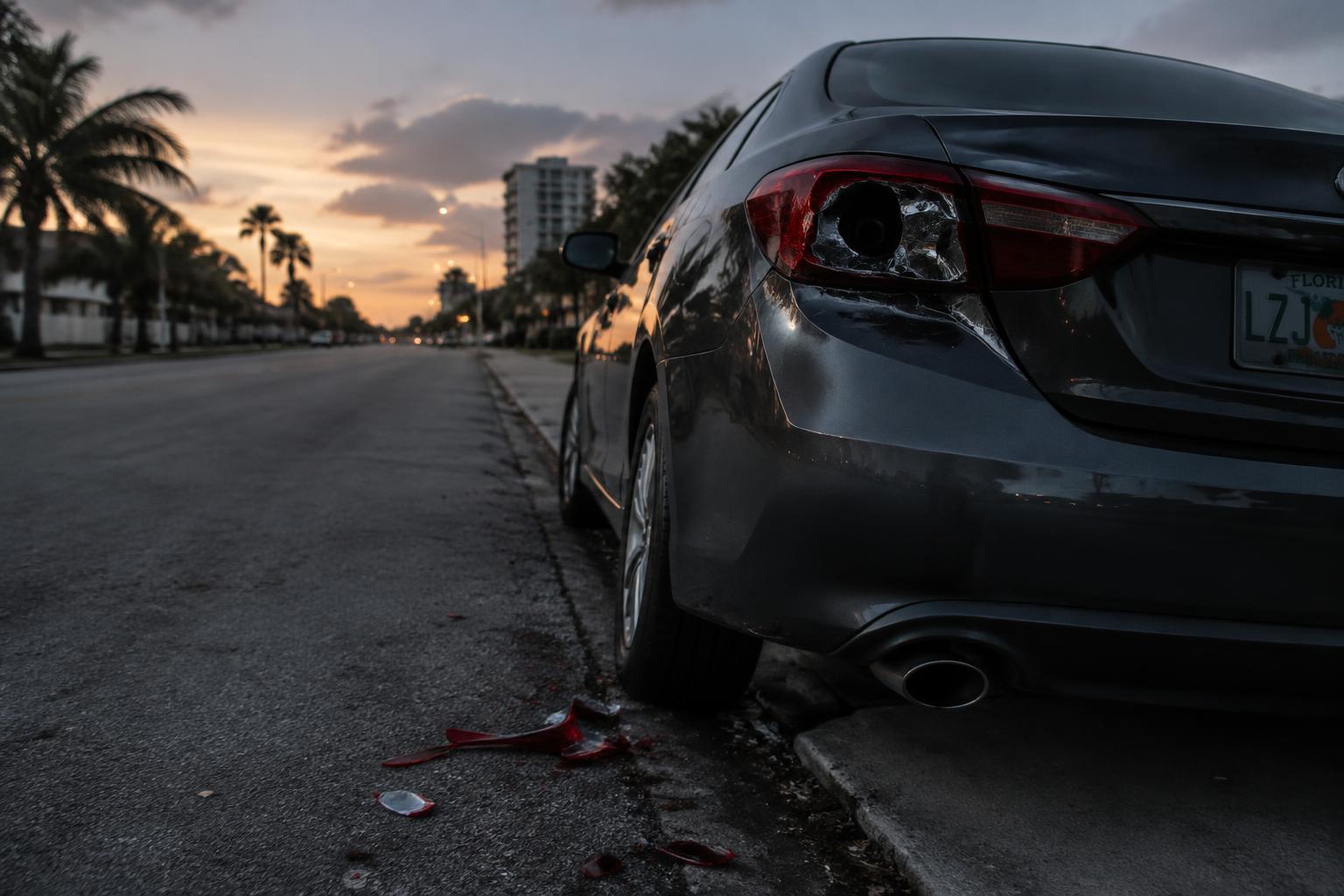
What Counts as a Hit-and-Run Accident in Florida
A hit-and-run occurs when a driver involved in a collision leaves the scene without stopping to exchange information or render aid. This can happen in parking lots, at intersections, or on highways, and it can involve another vehicle, a pedestrian, or a bicyclist. Florida law expects drivers to stop after any crash involving injury or property damage, but not every driver complies. When the at-fault driver cannot be identified, injured victims are often left wondering how their medical bills and vehicle repairs will be covered.
These crashes can occur in many of the same ways as rear-end collisions or t-bone accidents, the key difference being that the responsible driver flees before police arrive. Witnesses, traffic cameras, and physical evidence at the scene can sometimes help identify a fleeing driver later.
What to Do Immediately After a Hit-and-Run
At the Scene
- Call 911 and request police and medical response if anyone is injured
- Try to note the other vehicle's color, make, and any partial license plate
- Photograph vehicle damage, skid marks, and the surrounding area
- Ask nearby witnesses or businesses if they saw what happened or have surveillance footage
- Seek medical evaluation even if injuries seem minor at first
Prompt documentation matters because it supports both the police investigation and any insurance claim you later file. Delayed reporting can make it harder to connect your injuries to the crash.
How Uninsured Motorist Coverage Can Help After a Hit-and-Run
When the at-fault driver cannot be found, uninsured motorist claims coverage on your own auto policy may become relevant. UM coverage is designed to step in when the responsible driver has no insurance or, in a hit-and-run situation, cannot be identified at all. Not every driver carries UM coverage, since it is optional in Florida, so checking your policy declarations page is an important early step.
If UM coverage applies, the claim is generally handled through your own insurer, though the process can still involve disputes over the value of your injuries or whether the crash truly qualifies as a hit-and-run. Insurers may request the police report, photographs, and witness statements before agreeing to pay a claim under this coverage.
The Role of PIP Coverage in Hit-and-Run Claims
Florida is a no-fault state, which means your own Personal Injury Protection (PIP) coverage typically pays a portion of your medical expenses and lost wages after a car accident, regardless of who caused it. This applies to hit-and-run crashes as well. PIP is usually the first source of coverage victims turn to for initial medical treatment, even before UM coverage or any other claim is resolved.
PIP benefits have limits, and insurers sometimes dispute the necessity of treatment or delay payment. If you're dealing with resistance from an insurer, this guide explains some common reasons claims get delayed or undervalued.
Can Police Find the Driver Who Fled the Scene?
Police investigations into hit-and-run accidents can involve traffic camera footage, paint transfer analysis, vehicle debris left at the scene, and tips from the public. Some cases are resolved quickly, while others remain open for extended periods. Even if the driver is never located, that does not necessarily mean you are without options, since UM and PIP coverage exist independently of whether the at-fault driver is identified.
If the driver is eventually identified, additional avenues for recovery may open up beyond what your own policy provides, depending on the driver's insurance status and the circumstances of the crash.
Common Injuries in Hit-and-Run Accidents
Because hit-and-run drivers often flee at higher speeds or fail to brake before impact, injuries can range from whiplash and soft tissue damage to fractures and head trauma. Pedestrians and bicyclists struck in hit-and-run incidents may face especially severe injuries given the lack of protection a vehicle would otherwise provide. Prompt medical care creates a documented link between the crash and your injuries, which supports any insurance claim that follows.
How Comparative Fault Can Affect a Hit-and-Run Claim
Florida applies a comparative fault standard, meaning your own compensation may be reduced if you're found partially responsible for the crash. In hit-and-run cases, insurers may look closely at whether the victim's actions, such as lane position or speed, contributed to the collision, even though the other driver fled. Having a clear, well-documented account of the crash helps counter unsupported assumptions about fault.
What If the Hit-and-Run Driver Is Later Found Uninsured?
Sometimes a fleeing driver is eventually identified but turns out to have no insurance at all. In that scenario, the claim typically still proceeds under your UM coverage rather than through the other driver's nonexistent policy. Criminal charges the driver may face for leaving the scene are handled separately from the civil insurance claim process, and one does not guarantee the outcome of the other.
Frequently Asked Questions About Hit-and-Run Accidents
Placeholder
How Insurers Investigate Hit-and-Run Claims
When you file a claim through your uninsured motorist coverage after a hit-and-run, your insurer will typically open its own investigation separate from the police department's efforts. This can include reviewing the police report, inspecting vehicle damage for consistency with your account of the crash, and sometimes requesting a recorded statement. Insurers may look closely at whether independent evidence corroborates that another vehicle was actually involved, since UM claims for hit-and-run incidents can sometimes be harder to verify than claims involving an identified driver.
Cooperating with reasonable requests from your own insurer while still protecting your interests is an important balance to strike. Keeping copies of all correspondence and documentation you provide can help if questions arise later in the process.
Hit-and-Run Accidents Involving Pedestrians and Bicyclists
Hit-and-run incidents aren't limited to collisions between two vehicles. Pedestrians and bicyclists are sometimes struck by drivers who then leave the scene, often resulting in more severe injuries given the lack of protective structure. These victims may have coverage available through their own auto policy's UM provisions, or in some cases through a household member's policy, depending on the specific circumstances. Because pedestrians and bicyclists are especially vulnerable, prompt medical evaluation is critical even when initial injuries seem minor, since some injuries, like internal bleeding or concussions, may not be immediately obvious. Anyone struck while walking or riding should review options under our broader pedestrian accidents and bicycle accidents coverage areas for more specific guidance.
How Long Does a Hit-and-Run Claim Take in Florida?
There is no fixed timeline for resolving a hit-and-run claim, since much depends on whether the responsible driver is ever identified and how quickly your own insurer processes UM and PIP benefits. Straightforward claims involving clear documentation may move faster, while cases still under active police investigation can take longer as insurers wait for updates. Gathering complete records early, including the police report number, photographs, and any witness contact information, tends to help keep the process moving.
Insurers handling UM claims are still expected to respond within reasonable timeframes even without an identified driver. If your claim is stalling for reasons that seem unclear, reviewing this guide on delayed or undervalued claims may help explain what's happening.
What Evidence Helps Prove a Hit-and-Run Claim?
Because the at-fault driver isn't present to provide their version of events, hit-and-run claims often rely more heavily on physical and circumstantial evidence than other car accident claims. Useful evidence can include paint transfer on your vehicle, debris left at the scene, surveillance footage from nearby homes or businesses, and any partial license plate information a witness may recall. Vehicle damage patterns can also help investigators estimate the type, size, or color of the fleeing vehicle.
The strength of this evidence can influence how smoothly your UM claim proceeds, since insurers generally want some level of independent confirmation that a hit-and-run actually occurred, beyond your own account of the crash.
Mistakes to Avoid After a Hit-and-Run Accident
Some common missteps can weaken an otherwise valid hit-and-run claim. Leaving the scene before police arrive, failing to seek prompt medical care, or waiting too long to report the crash to your insurer can all raise questions later. Posting detailed accounts or photos of the crash on social media before your claim is resolved can also complicate things, since insurers sometimes review public posts during their investigation.
Being consistent in every statement you give, whether to police, your insurer, or medical providers, helps avoid discrepancies that an adjuster might otherwise use to dispute your version of events.
Serving all of Florida
Hit-and-Run Accidents Guidance in Miami-Dade County and Across Florida
Orellana Law has one office in Miami and serves clients with hit-and-run accidents matters throughout Miami-Dade County and across the entire State of Florida. Wherever you are in the state, you can meet with the firm by phone or video. Contact the firm to discuss your situation.